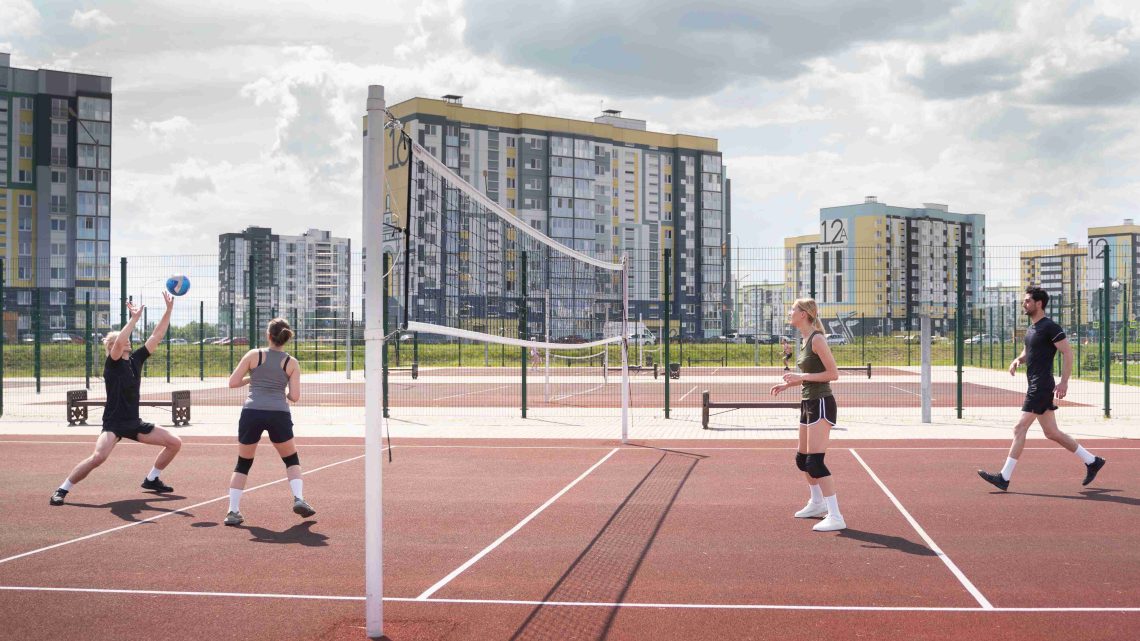
Rainwater can quickly affect an outdoor court when it has nowhere to drain. For volleyball courts, proper drainage helps prevent water from collecting on the playing surface, protects the court structure, and keeps the area safer for regular play. Poor water management can also lead to repeated maintenance issues and reduce the time a court remains ready for use. That’s why drainage should be considered alongside the court surface and base during the planning stage.
Why Proper Drainage Matters for Outdoor Volleyball Courts
Outdoor courts are exposed to rain, runoff, and moisture from the surrounding ground. When water stays on the surface for too long, it not only affects playability but also creates problems for the court over time.
The FIVB allows an outdoor volleyball playing surface to have a slope of up to 5 mm per metre in order to support drainage. Its rules also require the playing surface to remain flat, uniform, and free from conditions that could put players at risk.
A well-planned drainage approach can help:
- Move excess water away from the playing area
- Reduce standing water after rainfall
- Limit prolonged moisture around the court base
- Support safer and more consistent playing conditions
Forsan Alamal Alsarea considers drainage as part of the overall court construction process, helping the surface and underlying layers work together properly.
Key Ways Proper Drainage Improves Outdoor Volleyball Courts
From reducing water accumulation to protecting the playing surface and supporting safer play, proper drainage can make a noticeable difference to outdoor volleyball courts. The benefits can be seen in several important areas, including:
Reduces Water Accumulation
Poor drainage can leave puddles across the court, which makes movement difficult and delays play as well. Effective drainage helps direct rainwater away from the playing area rather than allowing it to stay on the surface.
It can help:
- Reduce standing water and surface pooling
- Move excess rainwater away from the court
- Allow the playing area to dry more efficiently
When planning the drainage layout, Forsan Alamal Alsarea can consider the court’s surrounding area and ground conditions in order to help establish an effective route for water to move away from the playing surface.
Protects the Playing Surface
Repeated exposure to excess moisture may contribute to surface deterioration and other maintenance concerns as well. Proper site grading and drainage can reduce unnecessary water retention.
This can provide:
- Better protection for the playing surface
- Less prolonged moisture around the court base
- Reduced risk of water-related deterioration
Forsan Alamal Alsarea can consider drainage requirements alongside base preparation and surface installation to support long-term court performance.
Improves Player Safety
Wet areas can make quick movements, jumps, and changes of direction more difficult. Keeping excess water away from the playing area helps create more suitable conditions for players.
Proper drainage can help:
- Reduce slippery wet patches
- Support more consistent surface conditions
- Help players move with greater confidence
Simplifies Maintenance
When water drains effectively, fewer problems are caused by persistent pooling and moisture. This can make routine upkeep easier and help preserve volleyball courts for regular use.
A suitable drainage system can also:
- Reduce recurring water accumulation
- Minimize moisture-related maintenance
- Help keep the court ready for use more consistently
Conclusion
To wrap up, drainage should be part of the planning process instead of something considered after construction. Proper grading, site preparation, and suitable drainage solutions can help outdoor volleyball courts stay safer, more durable, and easier to maintain.
Forsan Alamal Alsarea can incorporate drainage considerations into the wider court design and construction process for dependable long-term use. With the right planning from the start, a court can handle rainfall more effectively while providing a better playing environment for athletes.

