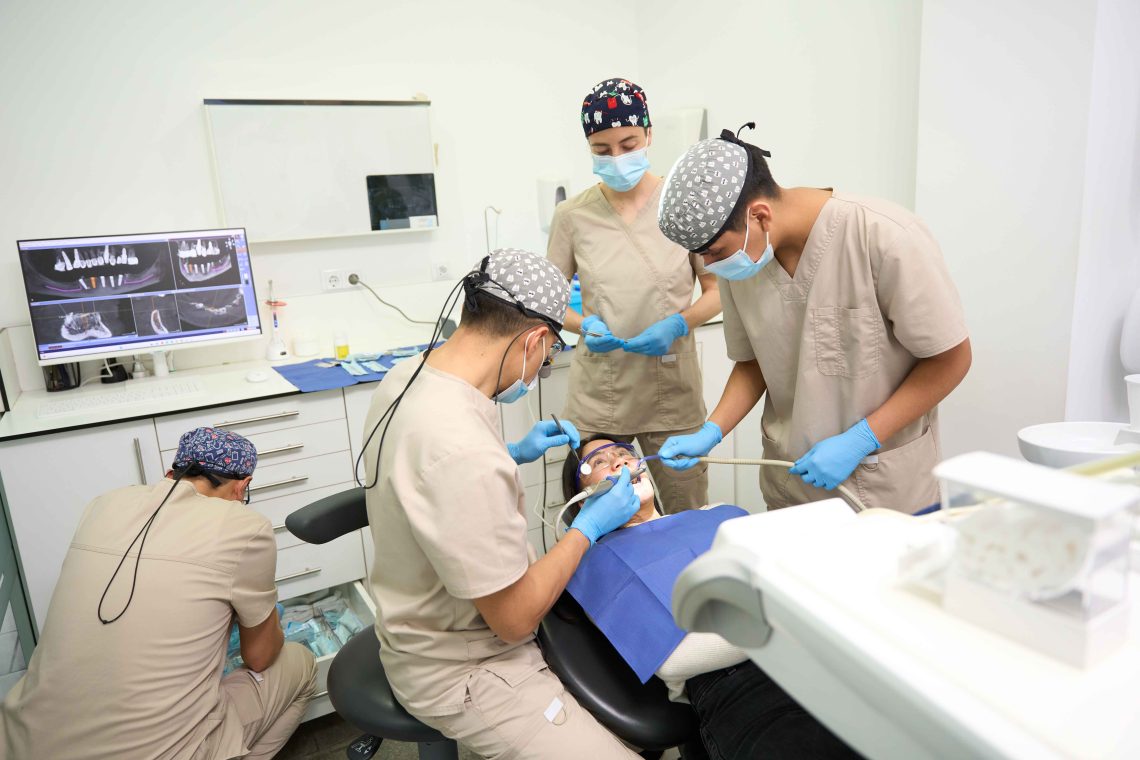
If dental problems are more complex than routine care, the choice of the best oral surgeon in JLT will make a big difference. Nevertheless, patients often are not sure what kind of dentist they need, which results in a delay in treatment and also choosing the wrong dentist.
Although both professionals are important to oral care, they are trained and responsible for different things, and they provide different treatment options as well. Understanding these differences can lead to better patient care, timely treatments, and reduced risks of complications.
When a General Dentist Is Enough for Treatment
Most dental issues are likely to be initially seen by a general dentist. In many instances, they can handle the problem entirely without the help of a specialist.
They are suitable for:
- Routine dental checkups and cleaning
- Mild tooth decay or sensitivity
- Fillings and minor restorations
- Early gum disease treatment
- Simple and non-complex extractions
These are typically simple cases that do not require surgical skills. Though if symptoms indicate deeper infection, affected teeth, or structural complications, patients are referred to the best oral surgeon in JLT for advanced treatment.
Differences Between a General Dentist and the Best Oral Surgeon in JLT
The only difference is the complexity of the dental issue and the treatment needed. A general dentist provides routine dental care, and an oral surgeon provides care for high-risk and surgical cases.
1. Type of Dental Problems They Treat
General dentists manage common issues that affect day-to-day oral health and are usually detected early.
These include:
- Tooth decay and mild pain
- Gum irritation or inflammation
- Small cavities and minor damage
- Routine dental maintenance
The best oral surgeon in JLT, on the other hand, treats cases where the problem goes deeper into bone, nerves, or impacted tooth structure.
Such cases include:
- Impacted wisdom teeth
- Severe dental infections
- Jaw pain or bone-related issues
- Complex extractions
- Dental trauma or structural damage
This is where treatment moves from routine care to surgical intervention.
2. Treatment Style and Decision Making
General dentists usually follow a conservative approach. Their goal is to treat issues early and avoid invasive procedures whenever possible.
This includes:
- Preventing disease progression
- Restoring teeth with simple methods
- Avoiding surgery unless necessary
The best oral surgeon in JLT follows a more advanced clinical approach where surgery becomes the most effective solution.
This includes:
- Surgical extraction of impacted teeth
- Dental implant placement
- Jaw correction or reconstruction
- Treating infections that affect deeper tissues
The decision is made based on imaging, severity, and structural involvement.
3. Level of Procedure Complexity
Predictable and low-risk treatments performed quickly by a general dentist.
Examples:
- Fillings
- Cleaning and scaling
- Simple tooth removal
The best oral surgeon in JLT handles complicated cases that demand precision and advanced planning.
These include:
- Wisdom tooth surgery is trapped in the bone
- Deep-rooted or broken tooth extraction
- Dental implant surgery requires bone preparation
- Jaw alignment procedures
These cases involve working near nerves and bone structures, requiring specialist training.
4. Pain Control and Surgical Support
Local anesthesia for routine treatments is usually all that is required, and that is what general dentists use.
The best oral surgeon in JLT uses more advanced pain and sedation techniques depending on case complexity, such as:
- Local anesthesia
- IV sedation
Advanced surgical pain control methods
This allows for the patient’s comfort even if surgery is lengthy or more complex.
Conclusion
To sum up, when it comes to quality, there’s no difference between a general dentist and the best oral surgeon in JLT; it’s just a matter of how complex the case is and what kind of treatment is required. General dentists are generally most useful for routine treatment and early intervention, while oral surgeons are useful in treating severe dental issues as well as those that require surgery.
The right specialist at the right time gives safer procedures, better outcomes, and faster recovery. At Dental Oasis, patients will be diagnosed correctly, and so will receive the right levels of dental care at all times.